
AI Agent Identity & Visibility
Every AI agent is an identity. Who owns it. Which MCP servers it uses. Whether it holds access that should stay split.
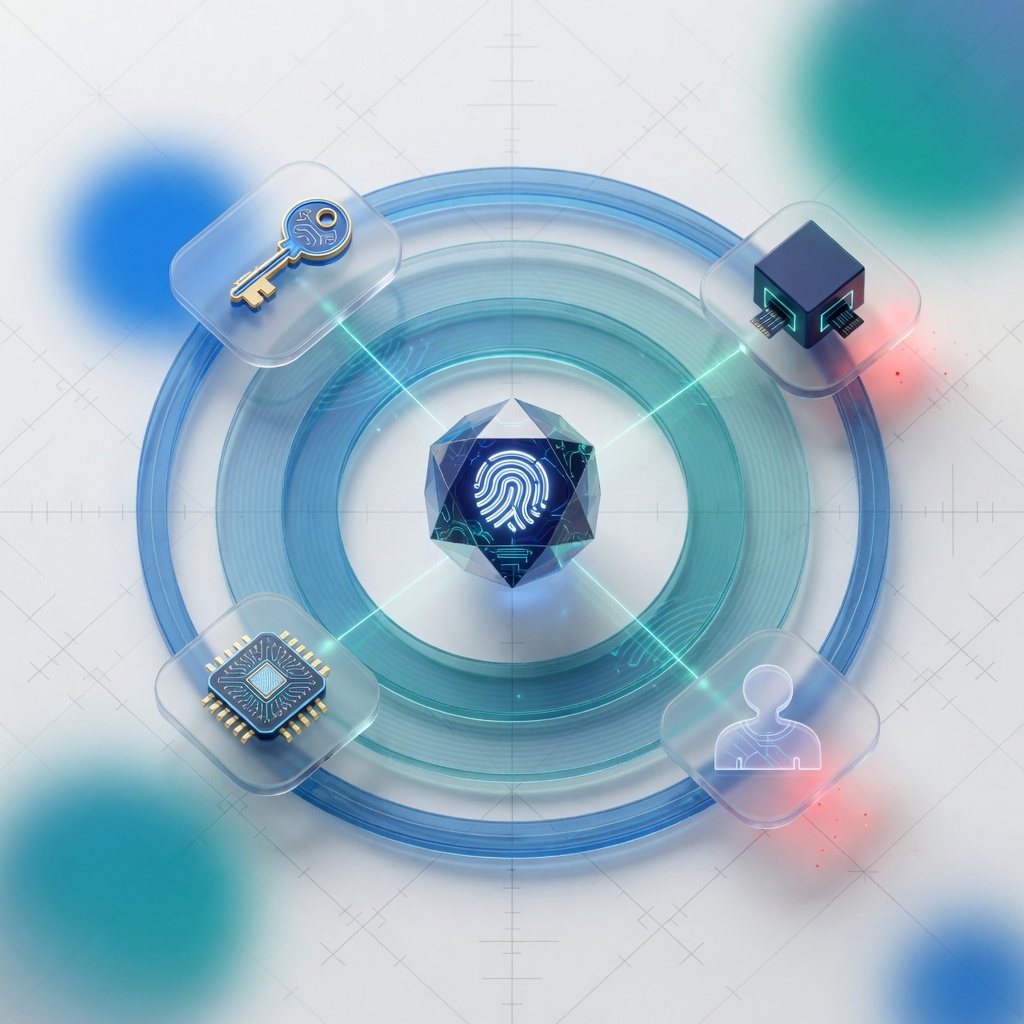
What is an AI agent identity?
An AI agent identity is the access an autonomous system uses to act: API keys, OAuth tokens, service accounts, MCP server credentials. Not the language model. The keys, the human owner, and what an attacker can still reach if they steal them.
Non-human identities already outnumber people 45 to 1 in modern cloud environments. AI agents are the fastest-growing class in that total. Often spun up in a few clicks, with no MFA and no offboarding.
Cydenti does not replace your IAM. It gives visibility on those identities, then ownership and segregation of duties.
Visibility, then an owner, then segregation of duties
IAM already does this for people. Agents skip the queue.
See
A live inventory of every agent and MCP server, plus the keys they carry. Not a spreadsheet. Not a questionnaire.
Own
Every agent identity gets a named human owner. No more orphaned agents that nobody dares touch for fear of breaking a workflow.
Separate duties
No single agent should hold conflicting permission scopes across services. That is segregation of duties, applied to machines.
An identity with no manager,
no offboarding, no MFA.
AI agents do not fit the identity model your security stack was built for. They authenticate with tokens and OAuth, not passwords. They keep standing permissions. They act at machine speed.
A person who dumps the CRM in three minutes trips your detectors. An agent doing the same thing often does not, because nothing is watching it as an identity. Nobody is named as owner. No segregation-of-duties review exists for it.
“An AI agent with CRM access is an identity, with a blast radius. Today it is often the least watched identity in the environment.”
- A named human owner
- A segregation-of-duties check
- A central MCP inventory
- Offboarding when the project ends
- An MFA prompt on a sensitive action
How Cydenti makes agents visible
Read-only discovery, within a week, with no agent to install. Remediation stays in your IAM or PAM.
Agent inventory
Most organizations cannot list every AI agent with access to their systems. Agents appear inside SaaS admin panels, via API keys, or inside a workflow tool, with no central register. Cydenti discovers them continuously, the same way it discovers service accounts and OAuth grants.
Human owner
An inventory without an owner is just a list. Cydenti maps each agent to a named human, plus a backup if that person has left. The owner is a field on the identity, not a Slack rumour.
MCP servers
Each MCP server typically carries its own credential. Cydenti treats it as a non-human identity: which agent uses it, what scope it has, whether it is still in use, and what it can reach.
Segregation of duties
An agent that answers tickets should not also push code and export the CRM. Cydenti flags permission combinations that, together, break segregation of duties, even when each grant looks acceptable on its own.
Permission mapping
Cydenti maps what each agent can read and write, down to the object in your CRM, ticketing tool, or code repository, so you can see who holds more than the job requires.
EU AI Act evidence
The EU AI Act expects documented oversight of systems that touch personal data. Cydenti produces the trail: which agents exist, who owns them, what they can reach, and what drifted.
Anatomy of an anomaly
An agent named support-copilot, meant to answer tickets, held a HubSpot integration and an MCP server into the code repo. One afternoon it started pulling CRM records far faster than it ever had.
Cydenti flagged the spike, showed the integration owner, and showed that the same agent could also push code. That is a segregation-of-duties conflict. Cutting access stays in your IAM. No customer data had left the environment yet.
Inventory
Cydenti already knew support-copilot existed, and which MCP it used.
Owner
The integration owner was notified, not an anonymous queue.
Segregation of duties
Support plus code-push on the same agent: a visible conflict.
Data flow
None of the read records had been forwarded outside the environment.
FAQ
What is an AI agent identity?
An AI agent identity is the access a copilot or autonomous agent uses to act: API keys, OAuth tokens, service accounts, MCP server credentials. Not the model. The keys, the owner, and what else those keys can still reach.
How do you get visibility on AI agents?
Cydenti discovers agents the same way it discovers other non-human identities: through a read-only API across connected SaaS, not a one-time questionnaire. You get a live inventory of agents, the MCP servers and tokens they use, a named human owner, and the permissions that create a blast radius.
What does MCP security mean here?
MCP (Model Context Protocol) is how many agents connect to tools and data. Each MCP server typically carries its own credential. Cydenti treats those credentials as first-class non-human identities: which agent holds them, what they can call, whether they still have an owner, and whether one agent has conflicting duties across systems.
Does Cydenti replace IAM or do segregation of duties for humans?
No. IAM and IGA still govern people. Cydenti applies ownership and segregation of duties to machines and agents: no single agent or token should hold conflicting permission scopes across services. You keep Okta or Entra ID. We show the agent identities those tools were not built to see.
What happens after you find an unowned or over-scoped agent?
Cydenti flags it, maps the owner and the blast radius, and hands remediation to your IAM or PAM workflow. Discovery is read-only and agentless. We do not mint short-lived runtime identities or cut the agent off ourselves.
How does Cydenti work alongside an existing PAM or IGA?
Cydenti completes your PAM and IGA; it does not replace them. It adds what those tools were not built to see in SaaS: an inventory of AI agents and MCP servers, a named human owner, and segregation-of-duties conflicts. Remediation stays in your PAM or IAM; Cydenti does not cut the agent off itself.
How long does a first AI agent inventory take?
Usually less than a week. Discovery is read-only, through an API on the connected SaaS, with no agent to install. You get the list of AI agents and MCP servers, the tokens they use, their human owner, and their blast radius. To start, the Audit Flash is free.
Discover the machine identities you didn't know you had
— the first inventory usually lands within a week.
The Audit Flash connects up to three SaaS apps through a read-only API and lists the service accounts, orphaned credentials, OAuth grants, and AI agents it can see. The first identity inventory usually lands within a week. A full sharing scan on a large tenant can take longer. No commitment.
No commitment • No credit card • Data hosted in Europe • Response within 24h